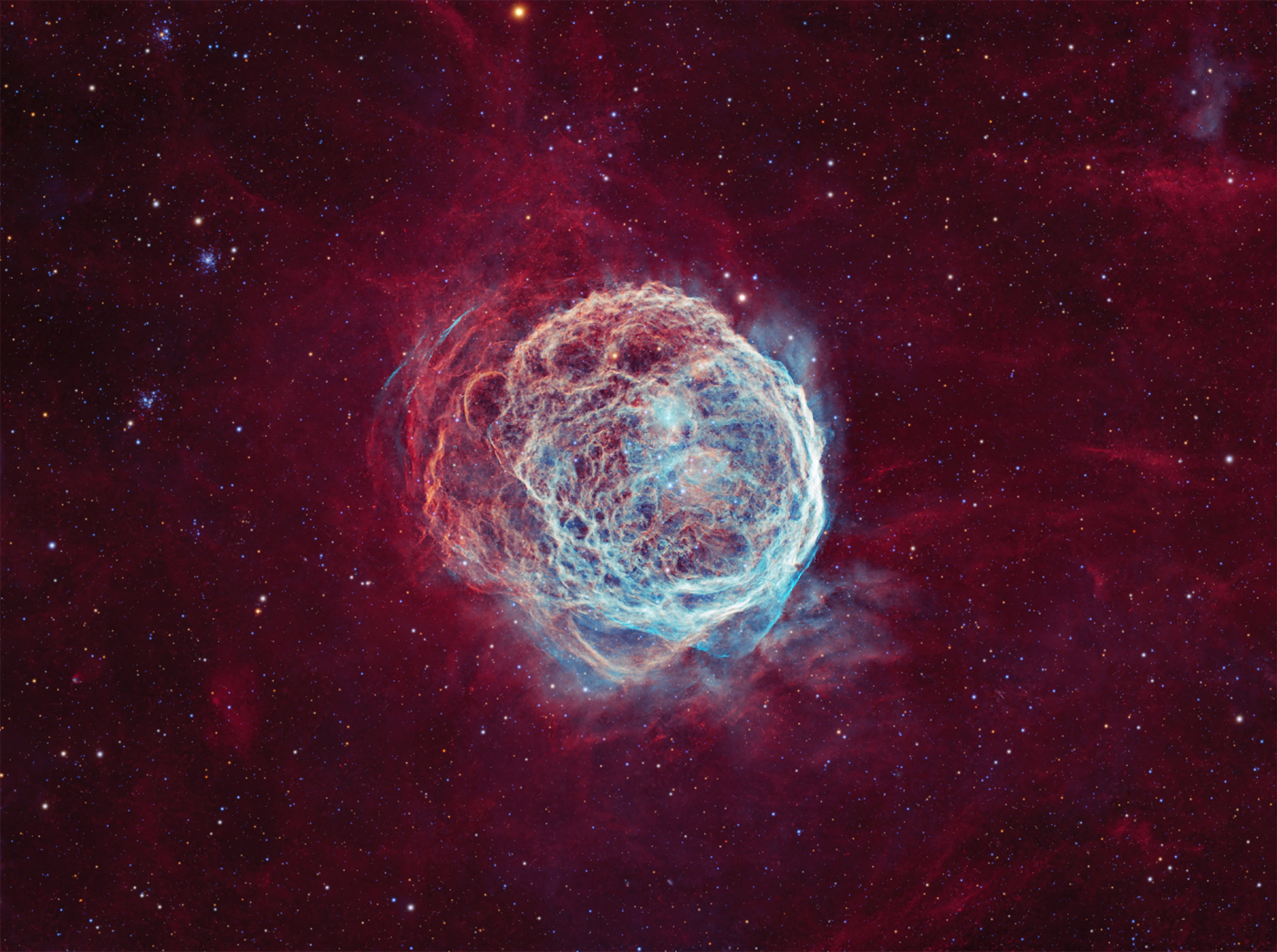
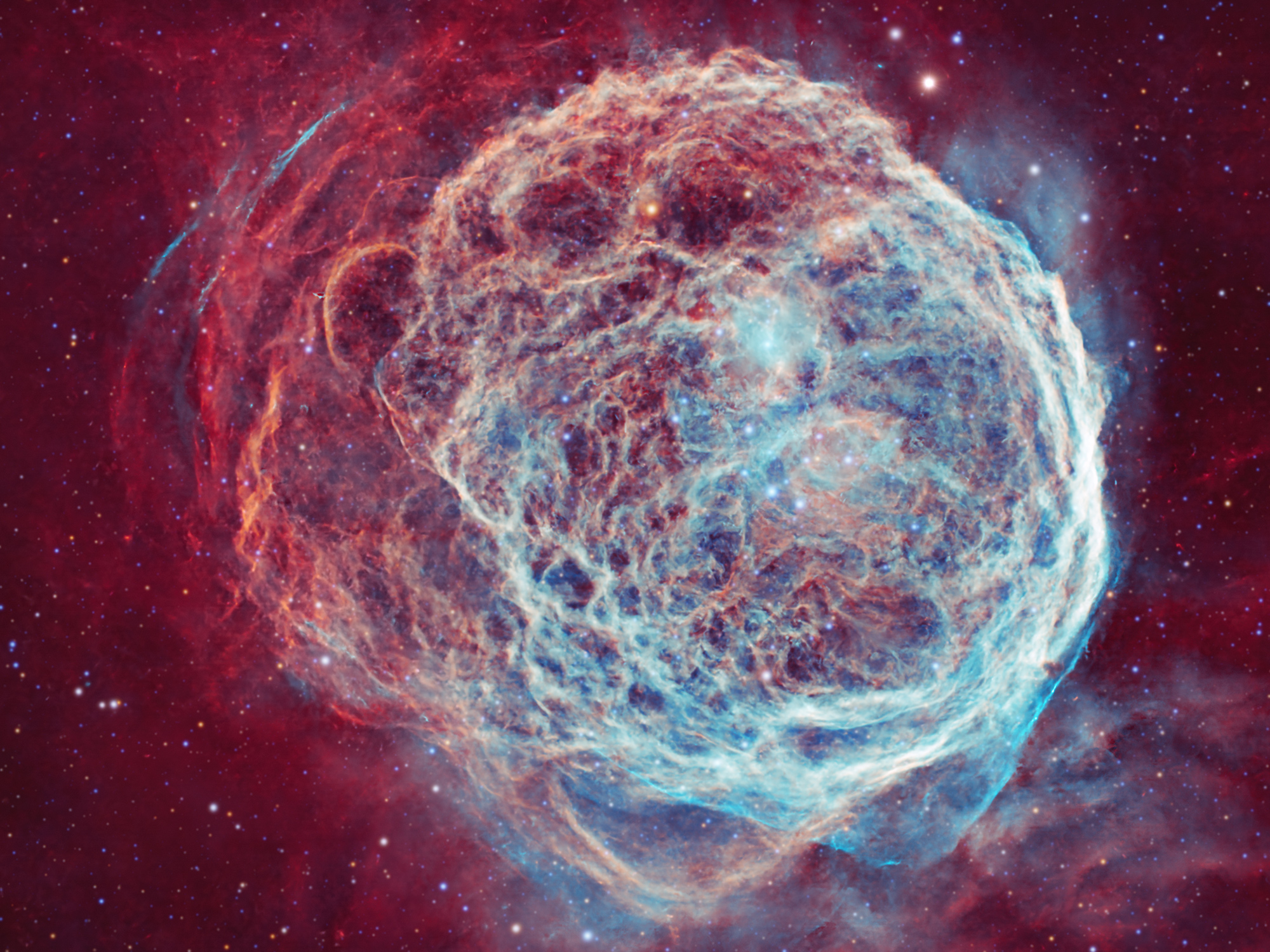
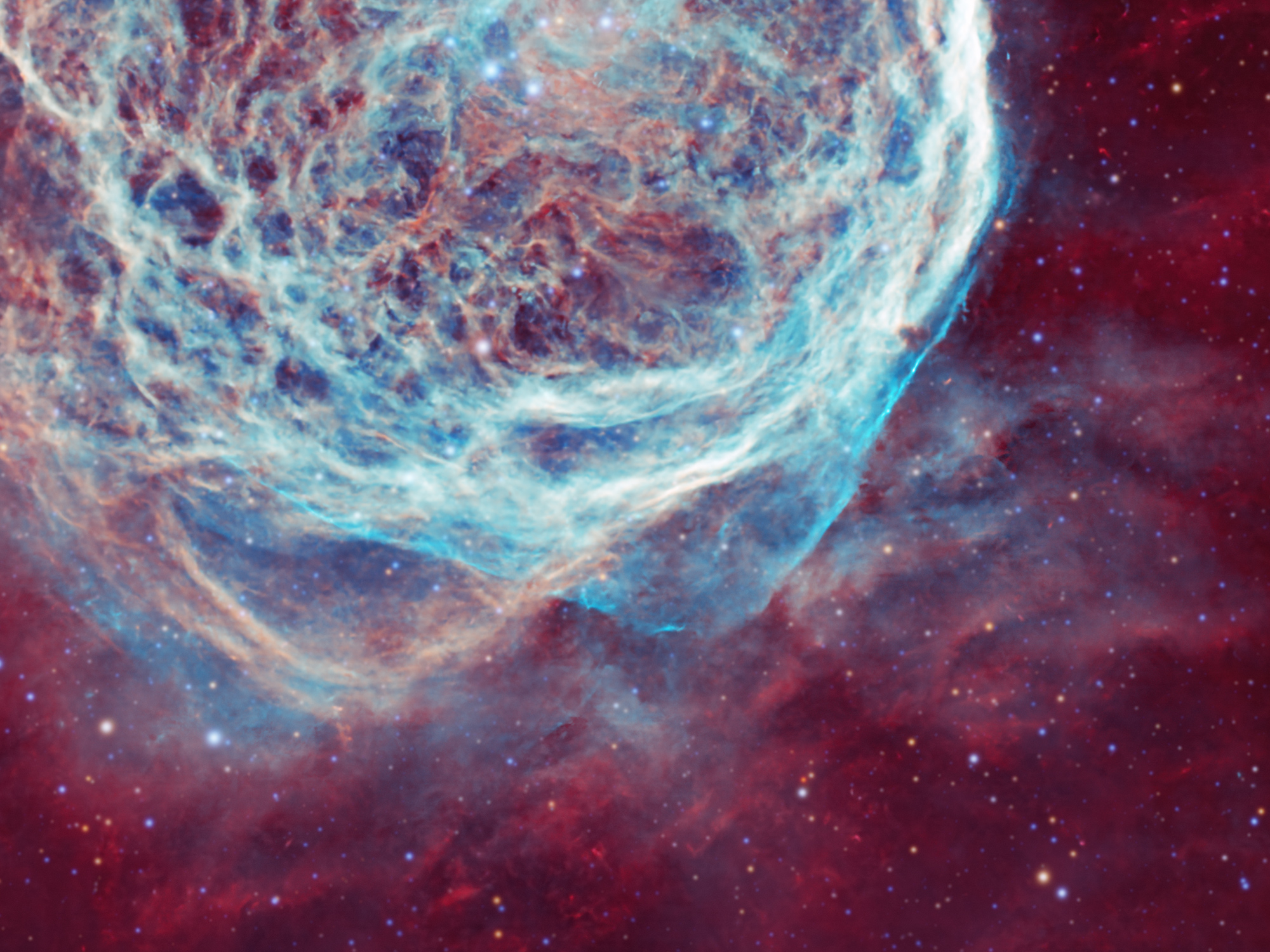
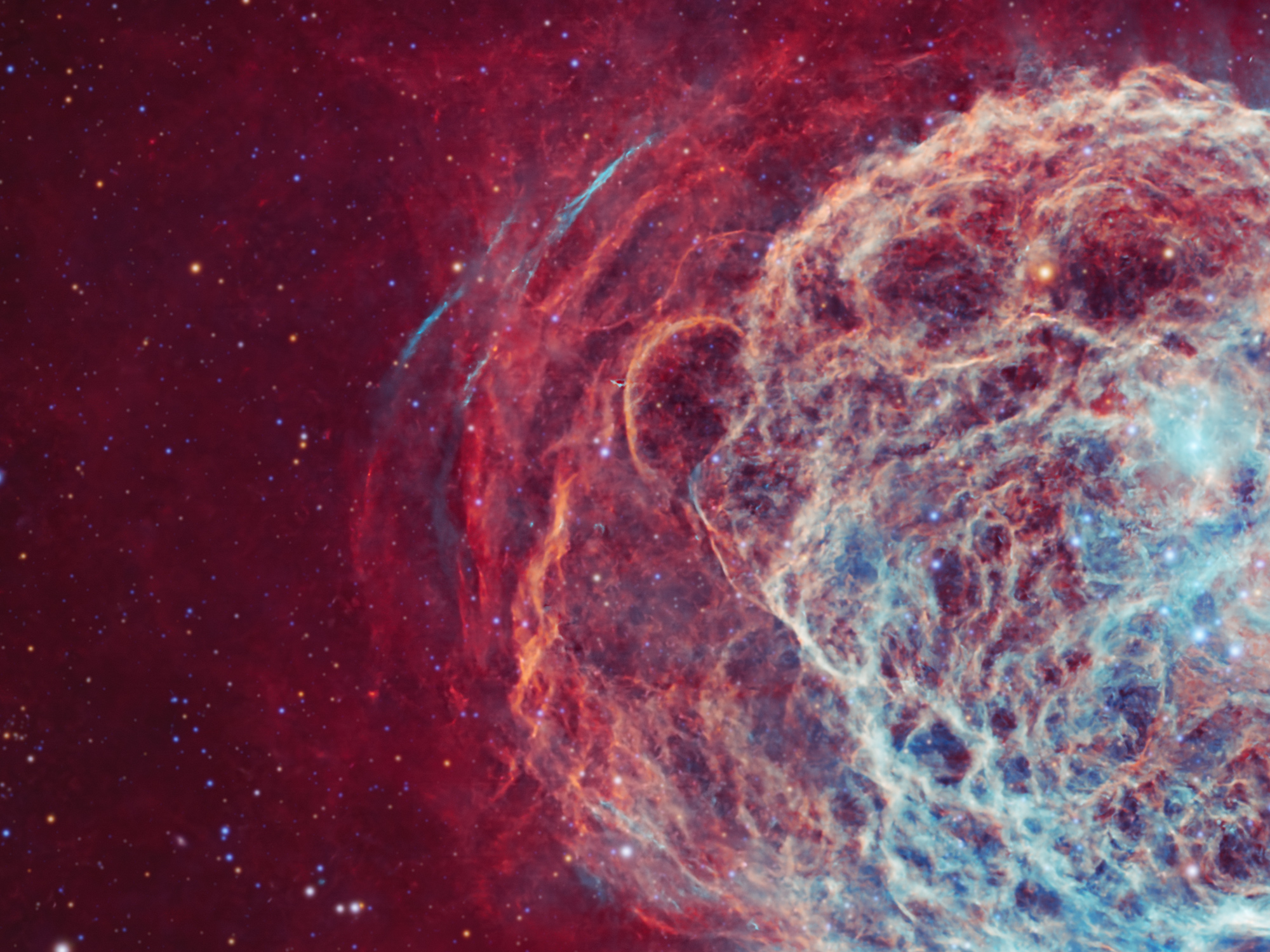
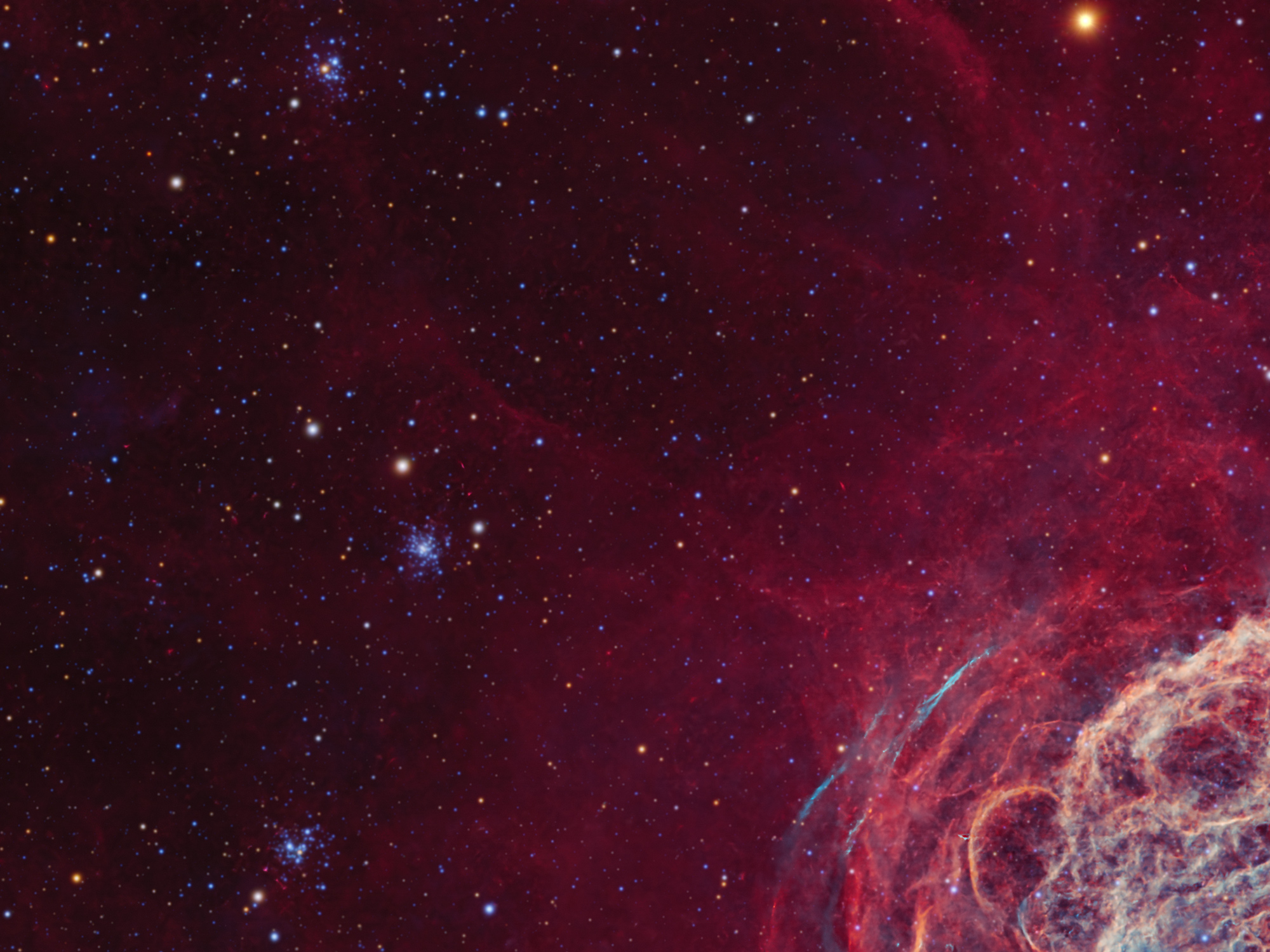
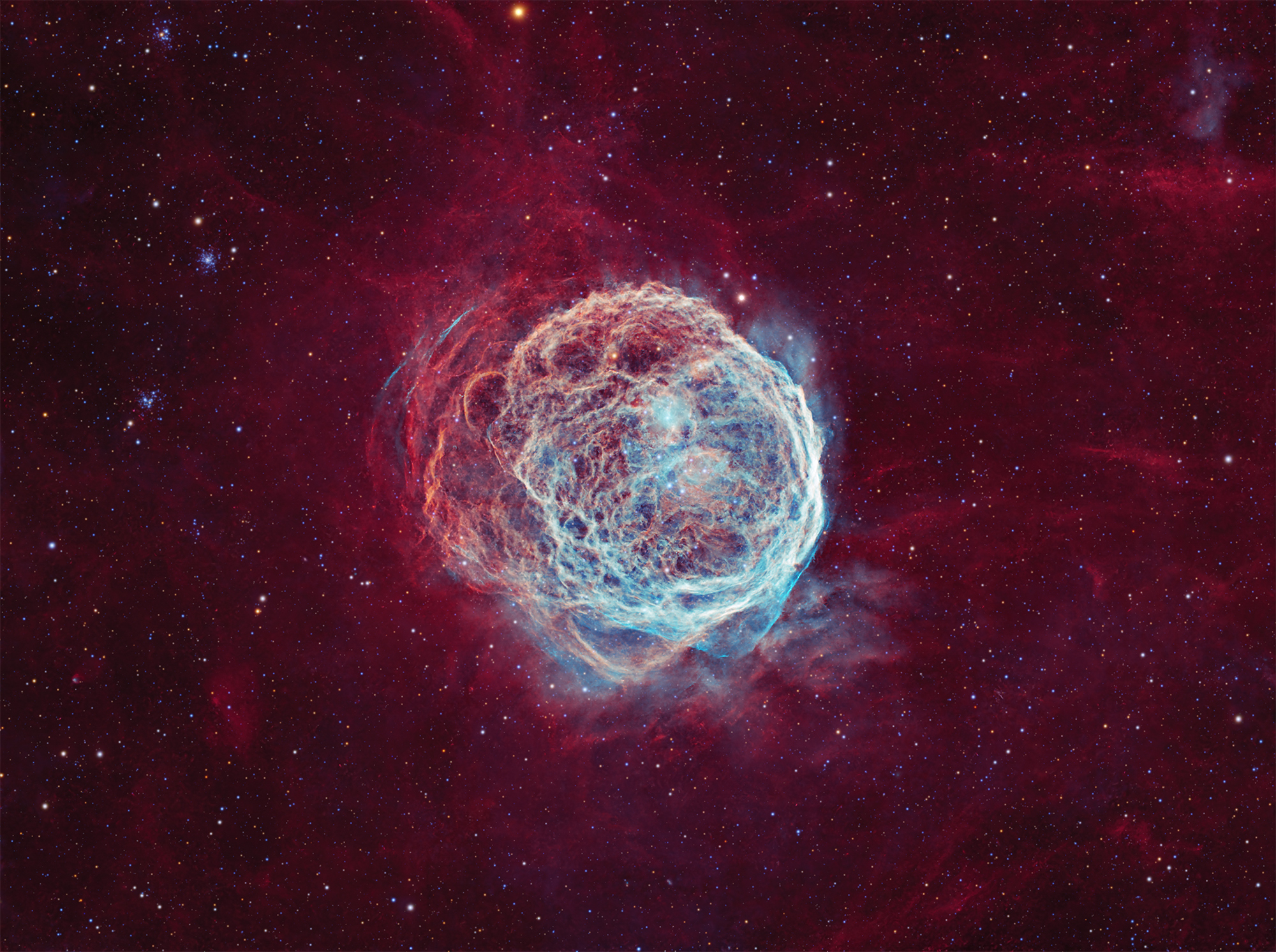
Henize 70 (also known as N70 or DEM 301) is one of the most striking superbubbles in the Large Magellanic Cloud, our neighboring dwarf galaxy visible only from the southern hemisphere. Spanning nearly 300 light-years, this vast shell of gas has been carved out by the combined force of stellar winds from hot, massive stars and multiple supernova explosions. Its interior is filled with hot, expanding gas, while its outer layers glow in O III, Hα, and S II emission. The O III forms a well-defined outer envelope, with Hα and S II tracing similar structures inside it—an arrangement reminiscent of Wolf–Rayet or supernova-driven bubbles, though Henize 70 is neither an SNR nor a planetary nebula.
Superbubbles like this act as engines of galactic evolution. They churn and mix interstellar gas and dust, redistribute heavy elements forged in stars, and help determine where future generations of stars will form. Because they can grow large enough to influence entire regions of a galaxy, they offer astronomers a window into the connection between stellar life cycles and the broader shaping of galaxies.
Henize 70 is also linked to a remarkable human story. The object belongs to a catalog compiled by astronomer Karl Henize, who dedicated years to studying the Large Magellanic Cloud during his tenure at Northwestern University. His passion for exploration eventually took him far beyond academia: in 1967 he left his professorship to join NASA as an astronaut, originally slated to fly on the later Apollo missions. He eventually reached space aboard Space Shuttle Challenger with the Spacelab-2 mission in 1985. Henize remained an explorer to the end—he died in 1994 while climbing Mount Everest, where he was laid to rest at 6700 meters.
This image was captured using the Planewave CDK1000 1-meter telescope from Baader Observatory Solutions. In the process of configuring the entire system for reliable remote operation via NINA, I was fortunate to spend considerable time on-site with the instrument. The result presented here is the first truly deep, long-exposure image taken with the now fully operational remote setup.
For more information—and for those interested in booking the observatory for remote astrophotography sessions—details can be found at baader-os.com.
Now available for purchase in 3 different sizes. Premium Fuji Crystal prints with a gloss finish. Fuji C-Type paper guarantees excellent detail, contrast and color accuracy.
Download of the fully calibrated data set now available!