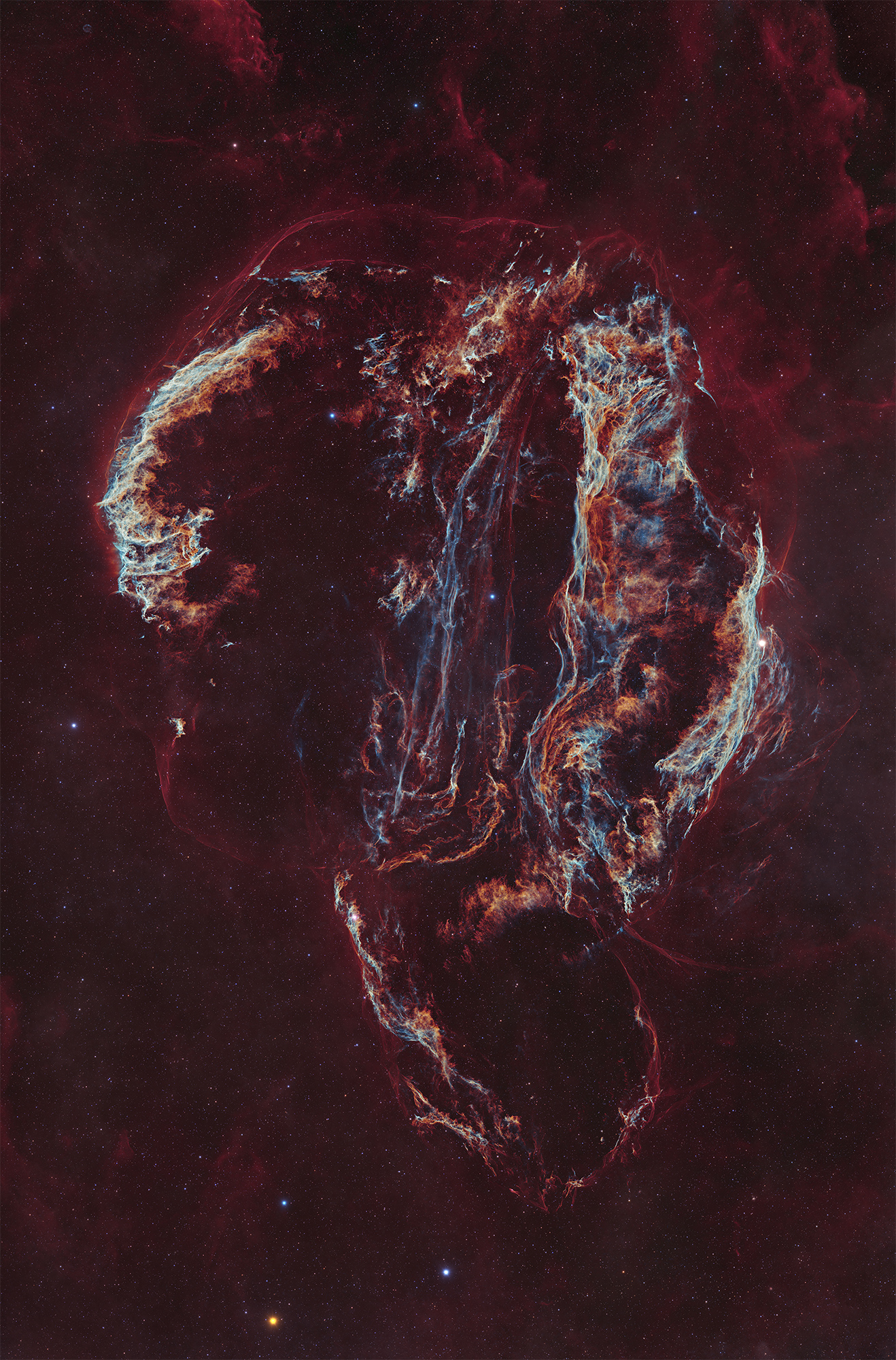
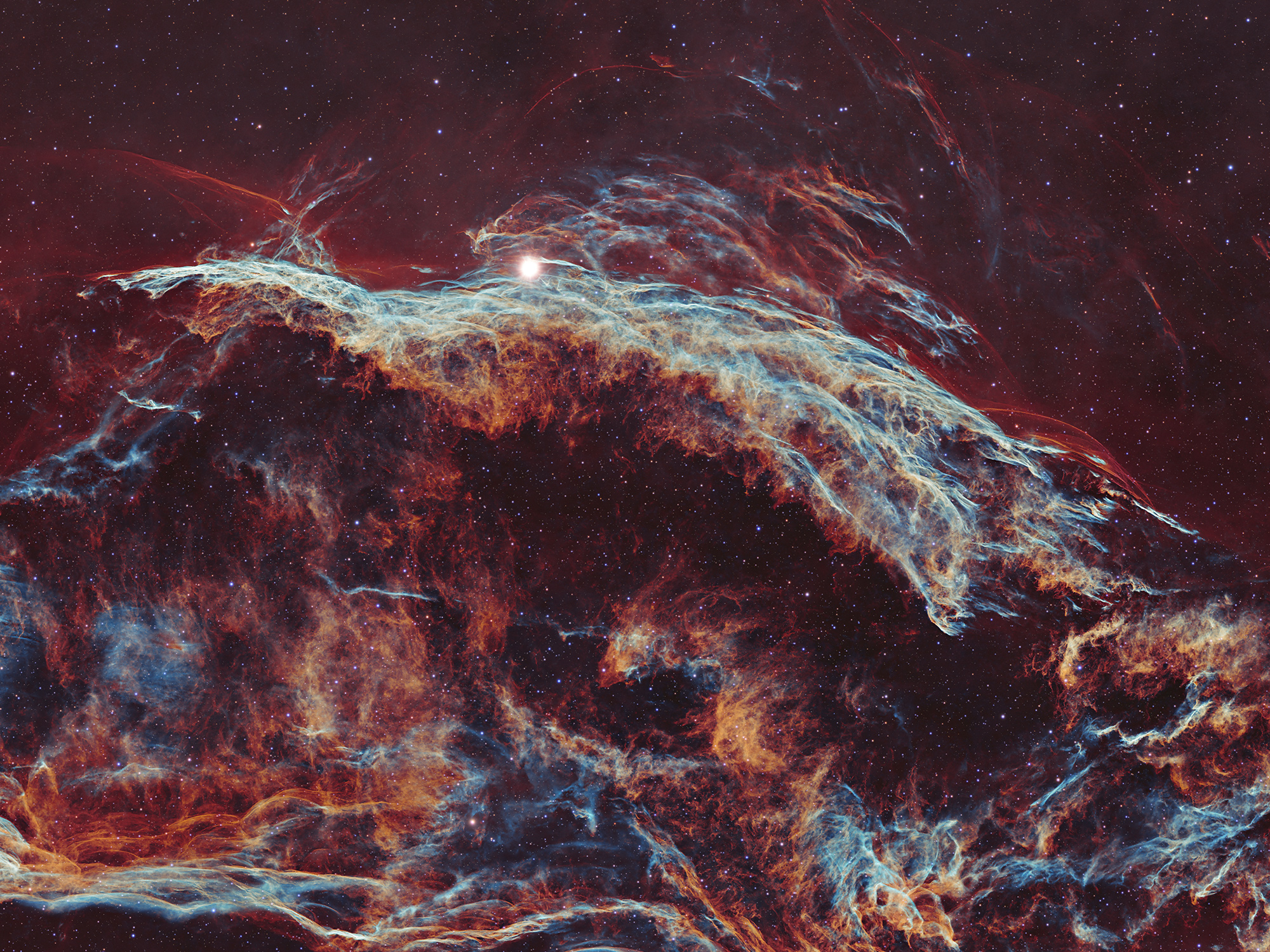
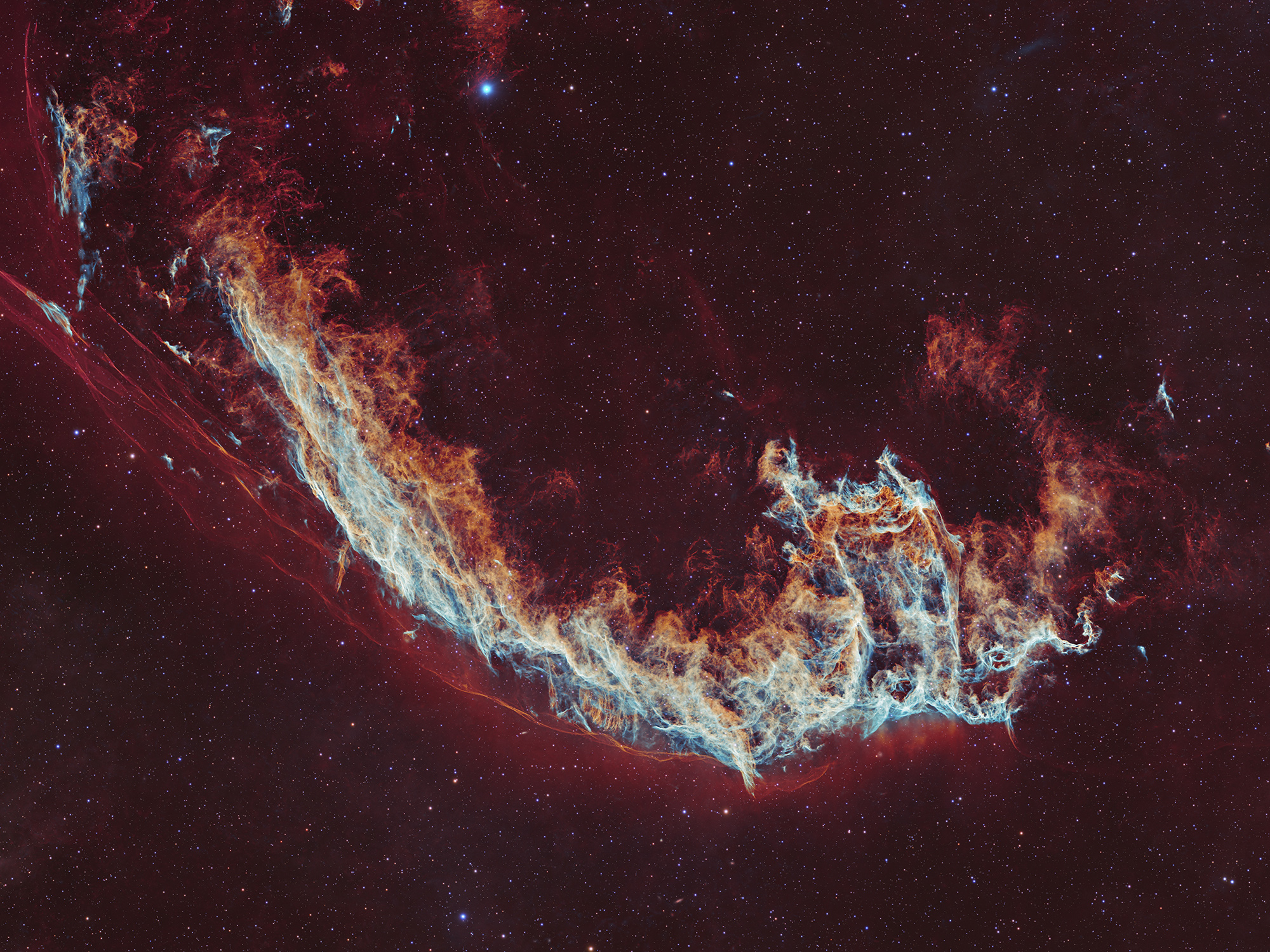
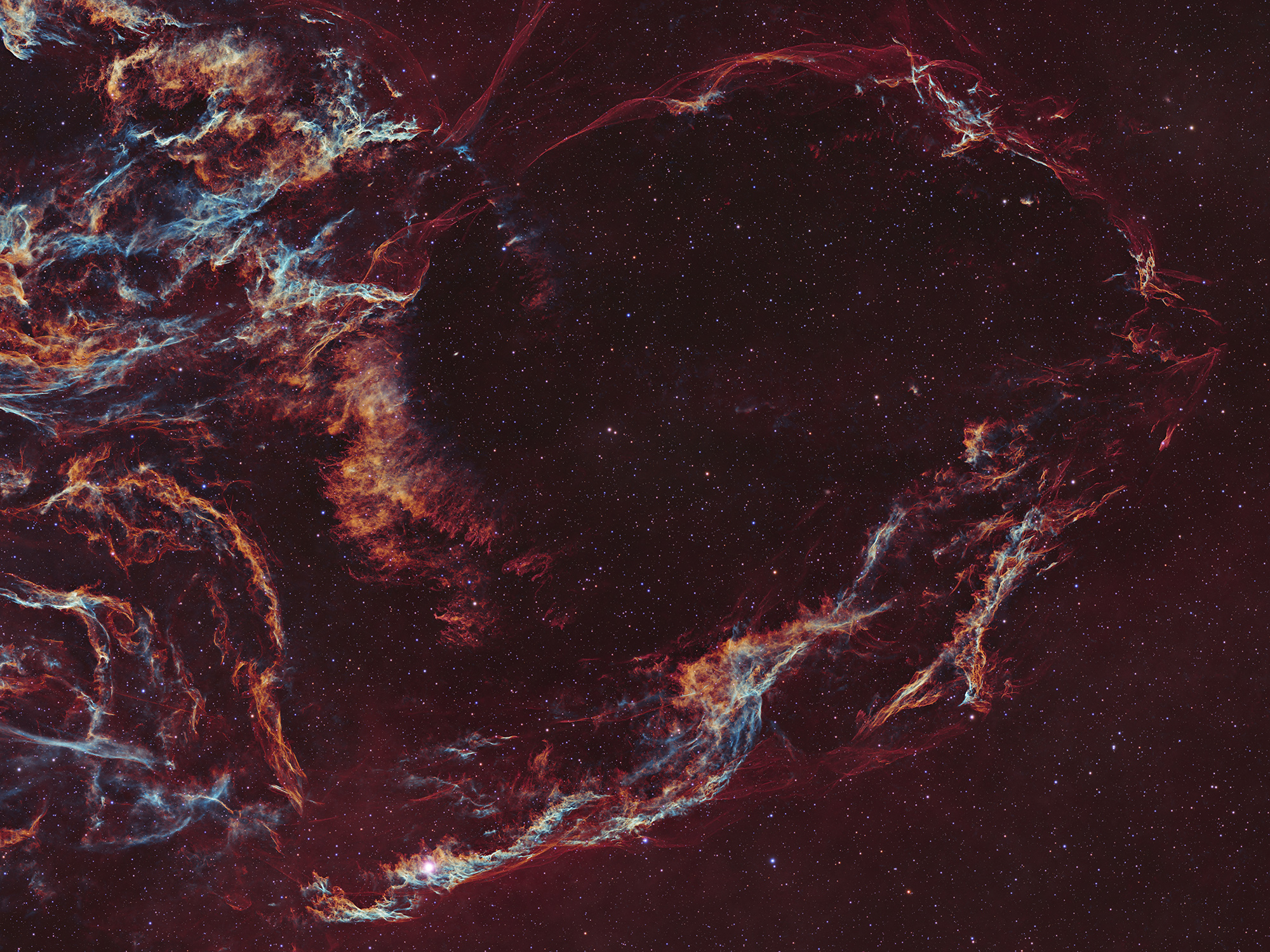
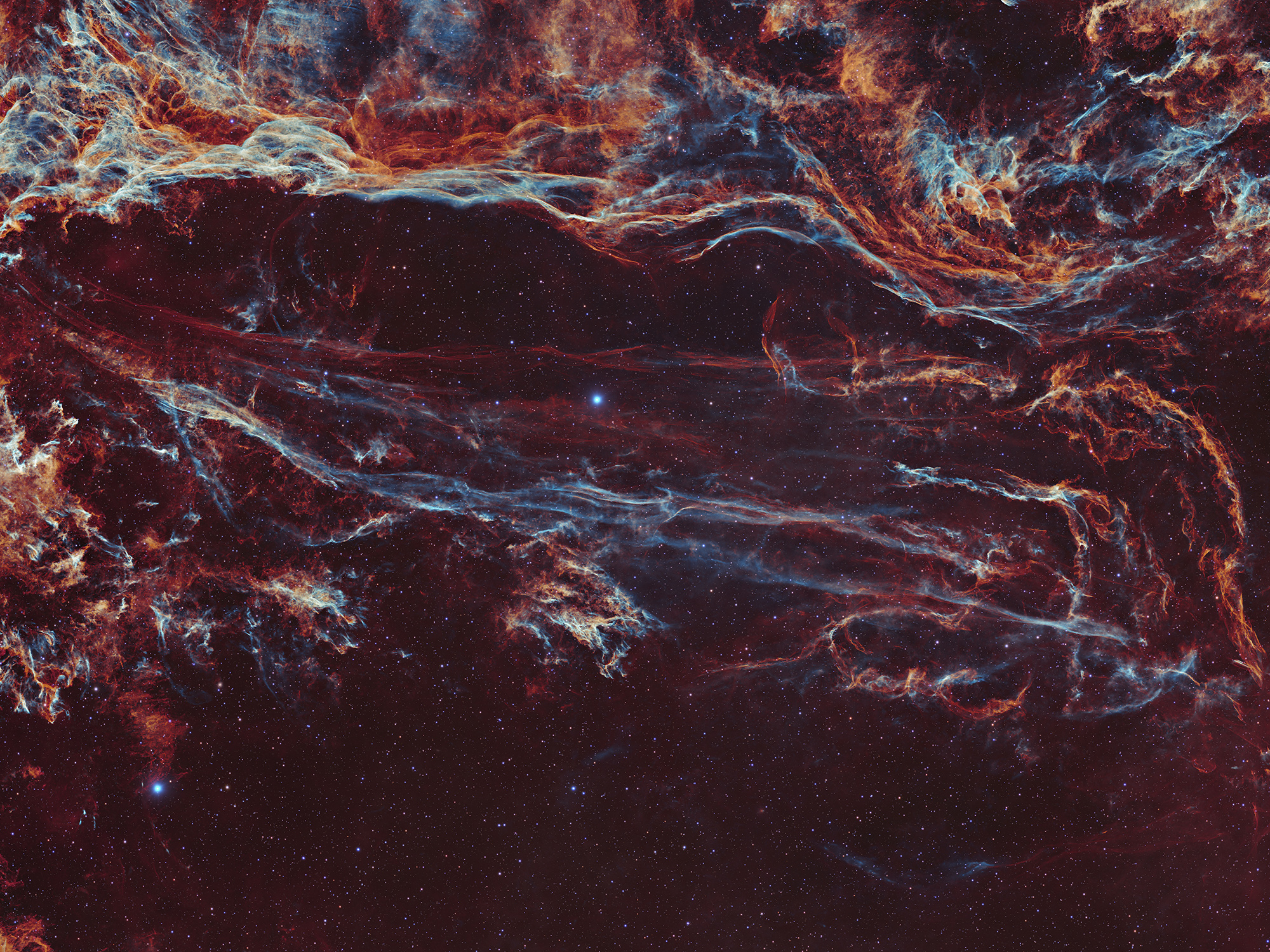
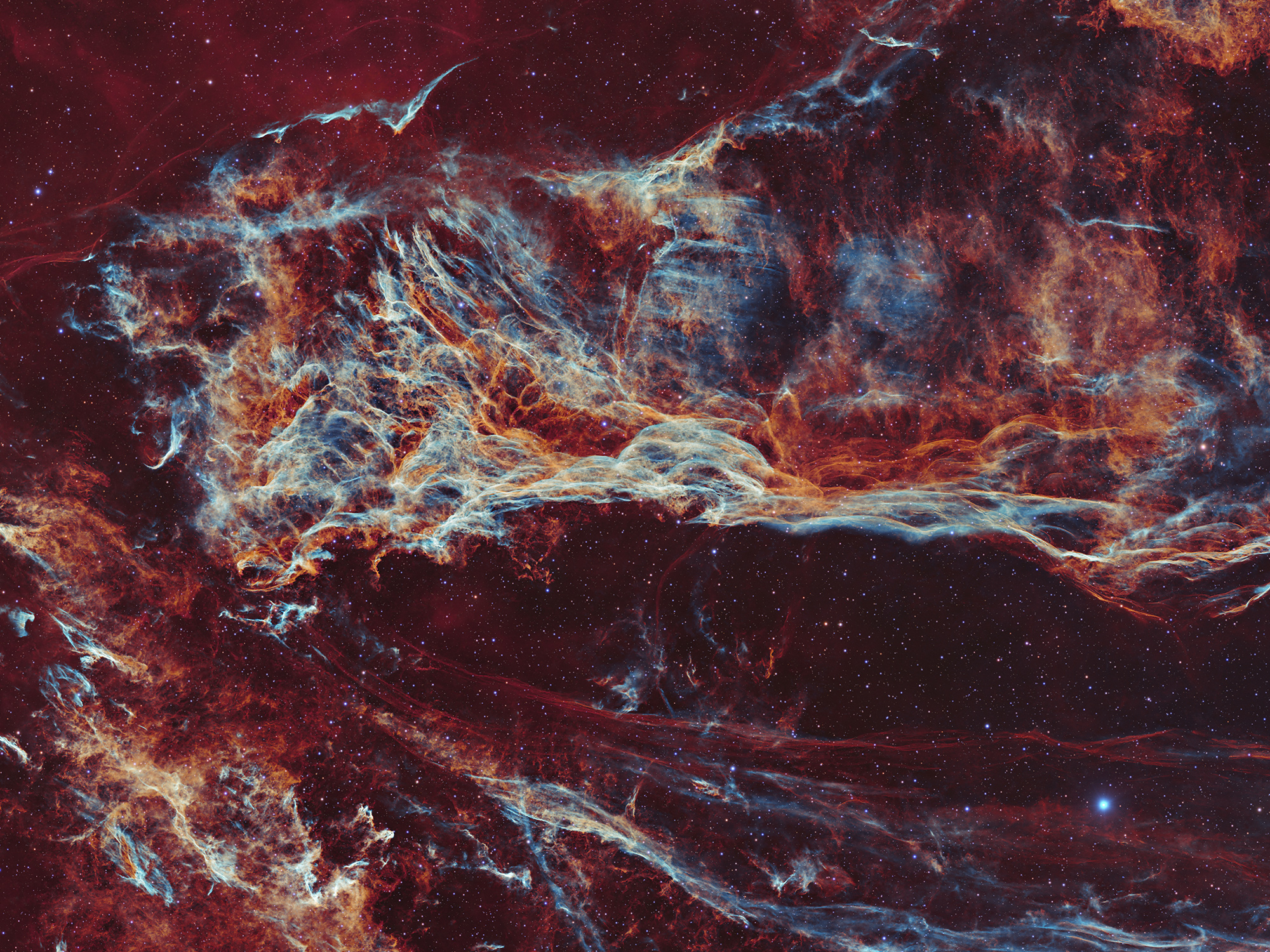
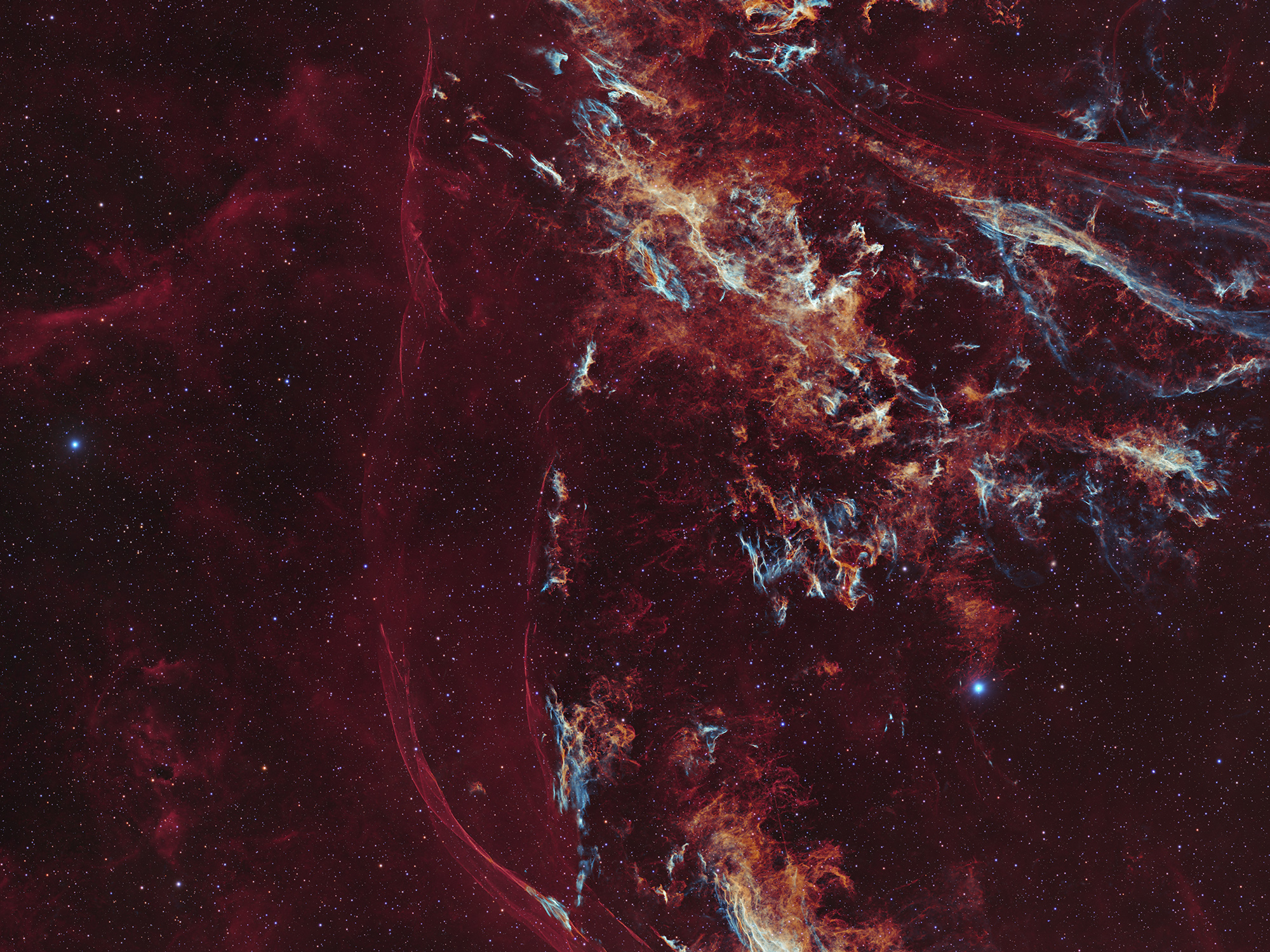
A ghostly visage on a cosmic scale, these remains of shocked, glowing gas haunt planet Earth’s sky toward the constellation of Cygnus and form the Veil Nebula. The nebula itself is a large supernova remnant, an expanding cloud born of the death explosion of a massive star. Light from the original supernova explosion likely reached Earth over 5,000 years ago. Also known as the Cygnus Loop, the Veil Nebula now spans nearly 3 degrees or about 6 times the diameter of the full Moon. That translates to over 70 light-years at its estimated distance of 1,500 light-years. In fact, the Veil is so large its brighter parts are recognized as separate nebulae, including The Witch’s Broom (NGC 6960) below and right of center.
Now available for purchase in 3 different sizes. Premium Fuji Crystal prints with a gloss finish. Fuji C-Type paper guarantees excellent detail, contrast and color accuracy.
Download of the fully calibrated data set now available!